Introduction
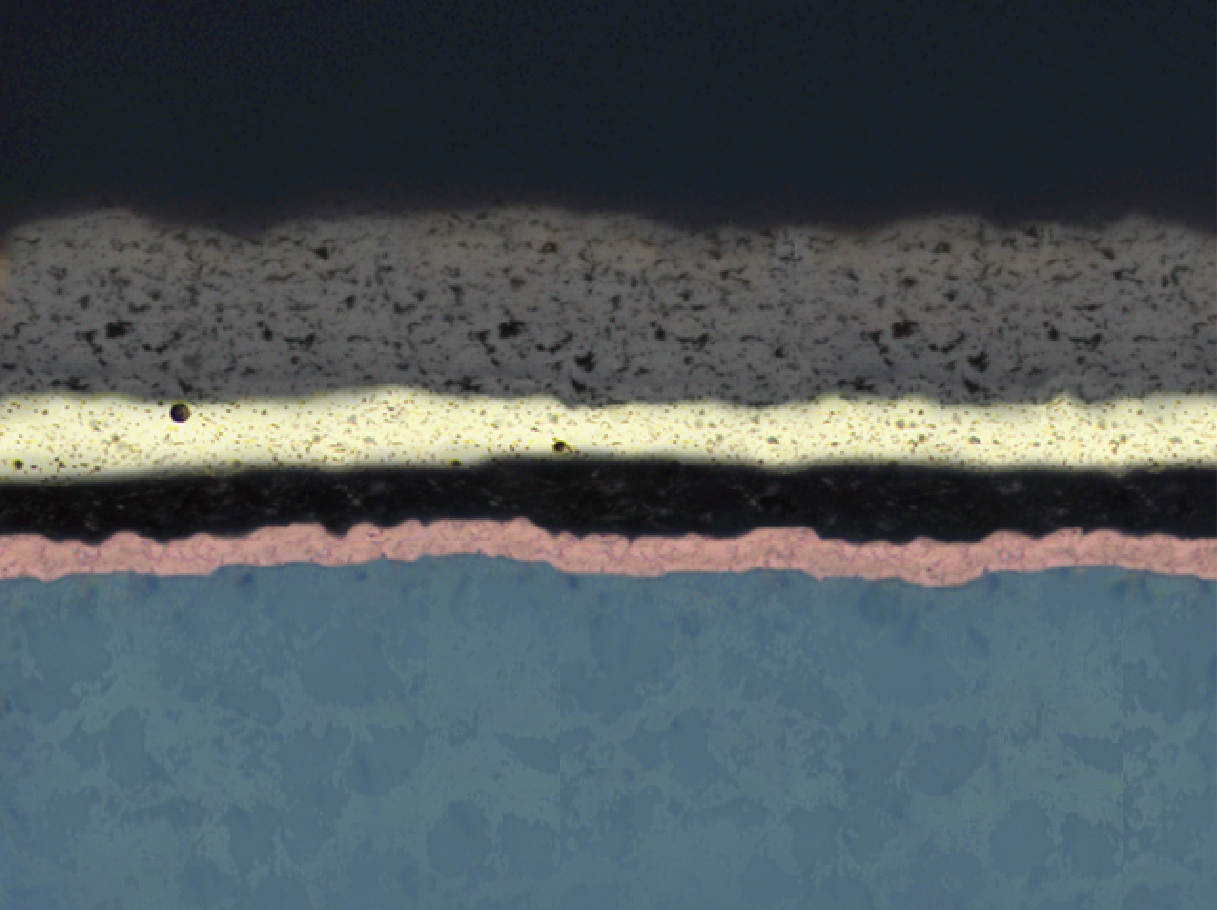
In the industry, coating is frequently utilised to enhance or protect the surface of materials. A key indicator that affects the coating process, quality, and cost is coating thickness. In the auto business, a car body with too little paint can result in expensive warranty claims, whereas a body with too much paint can cost millions of dollars per year. Decarburization analysis in steel and other metals, thermal spray or chemical deposition studies, and examining adhesion or surface wear are additional applications where layer thickness measurement is crucial.
The efficient method of layer thickness measurement introduced by Clemex in this note may lower the likelihood of human mistake in feature recognition.
Phase segmentation in Clemex Studio
1. Create seven classes for each feature (background, layer_1, layer_2, layer_3, layer_4, layer_5) by clicking "plus sign" button, respectively.
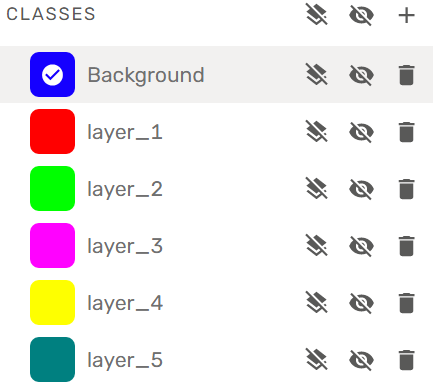
2. Apply one annotation for each class
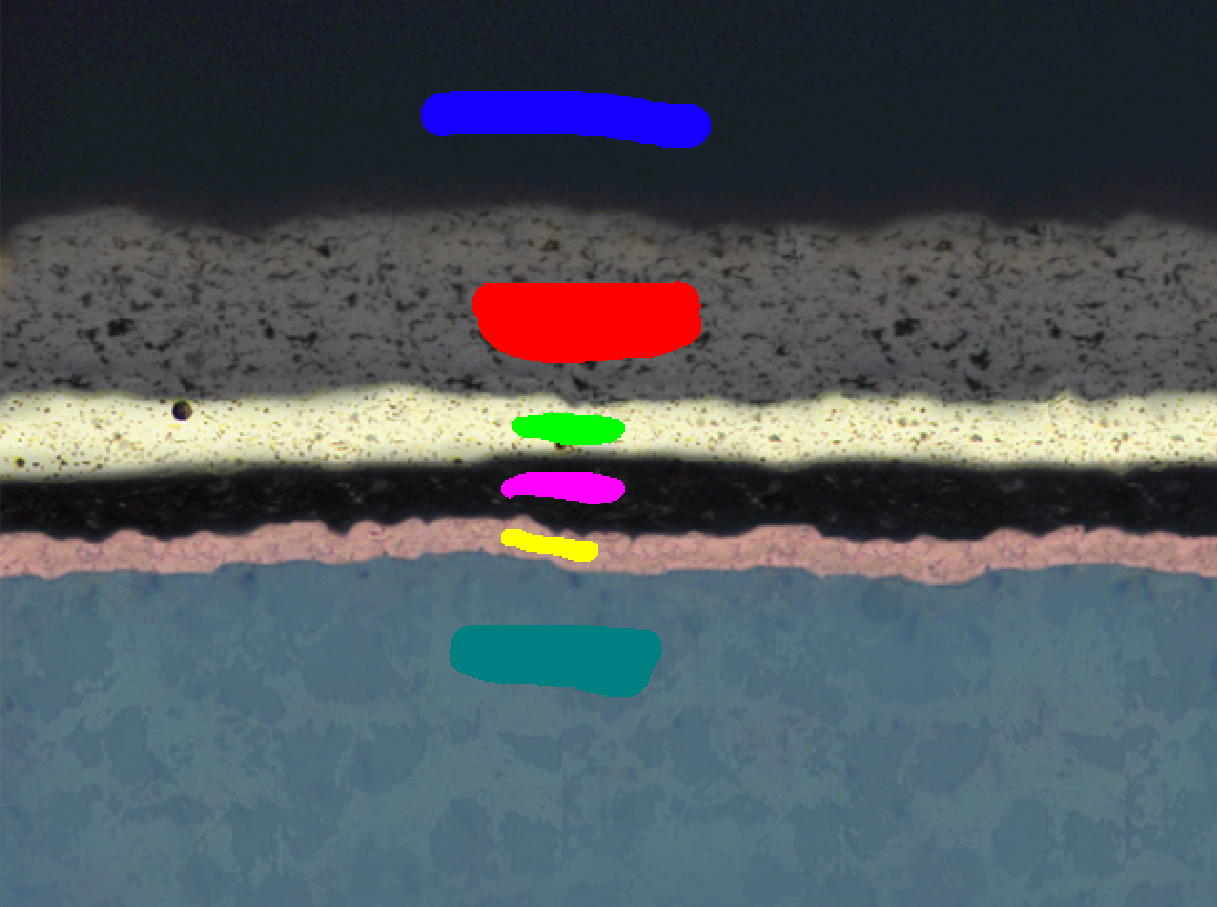
3. Click TRAIN button to train the Algorithm

4. Fine tune the results by applying additional annotations at phase interaction region
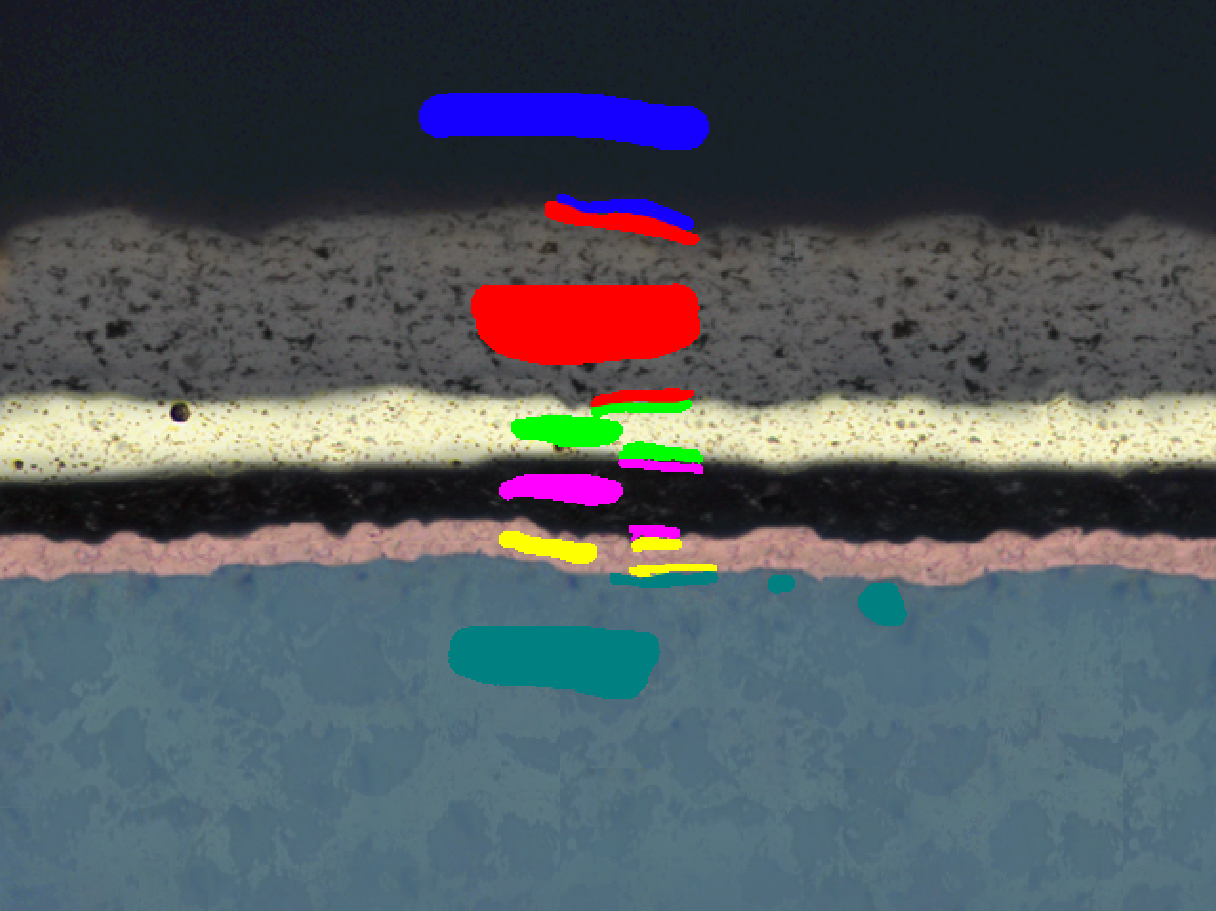
5. Validate results and download plugin by clicking DOWNLOAD button to be used in Vision for further analysis. This plugin is already part of Clemex LayerThickness application package.

Tutorial Video: Annotation in Clemex Studio
(coming soon)
Quantitative measurement in Clemex Vision
- Open Clemex Vision
- Open GeneralLayerThickness.routine from C:\IAFiles\Application Packages\LayerThickness\ClemexStudioRoutineTemplate\General LayerThickness
- Load images and insert correct plugin
- Run the routine to obtain results
Tutorial Video: Measurement in Clemex Vision
(coming soon)
Results
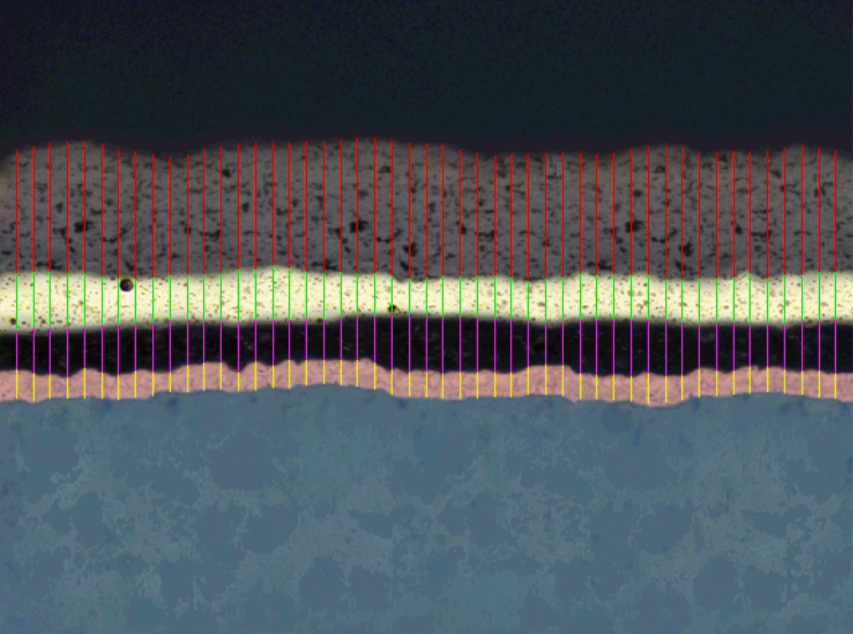
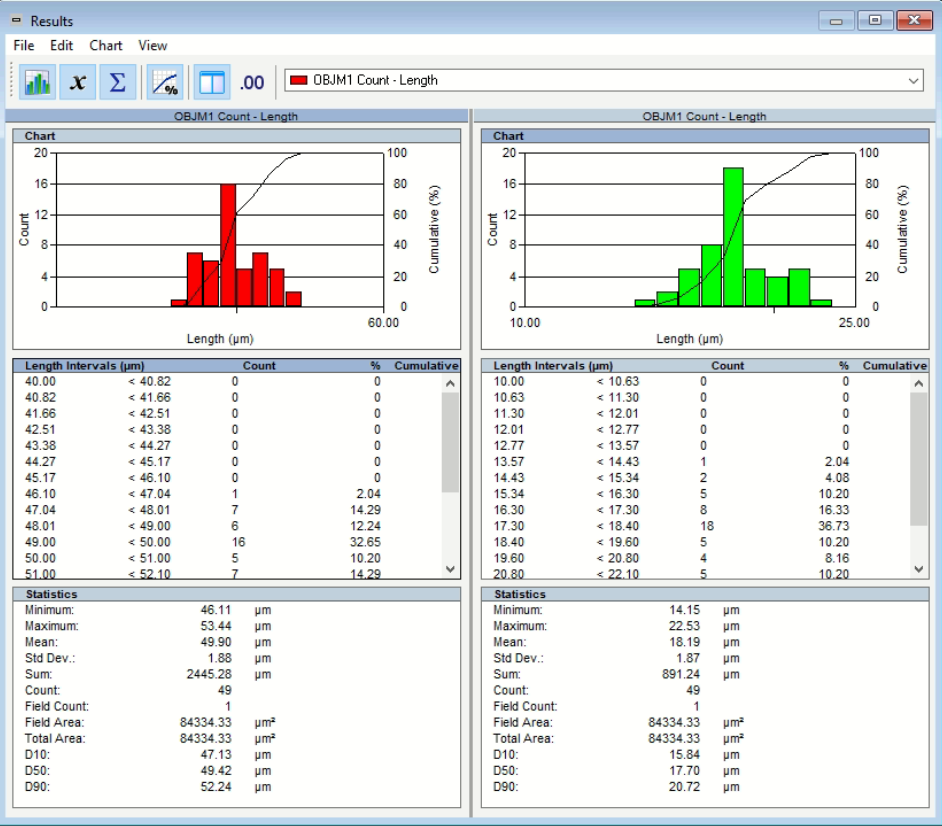
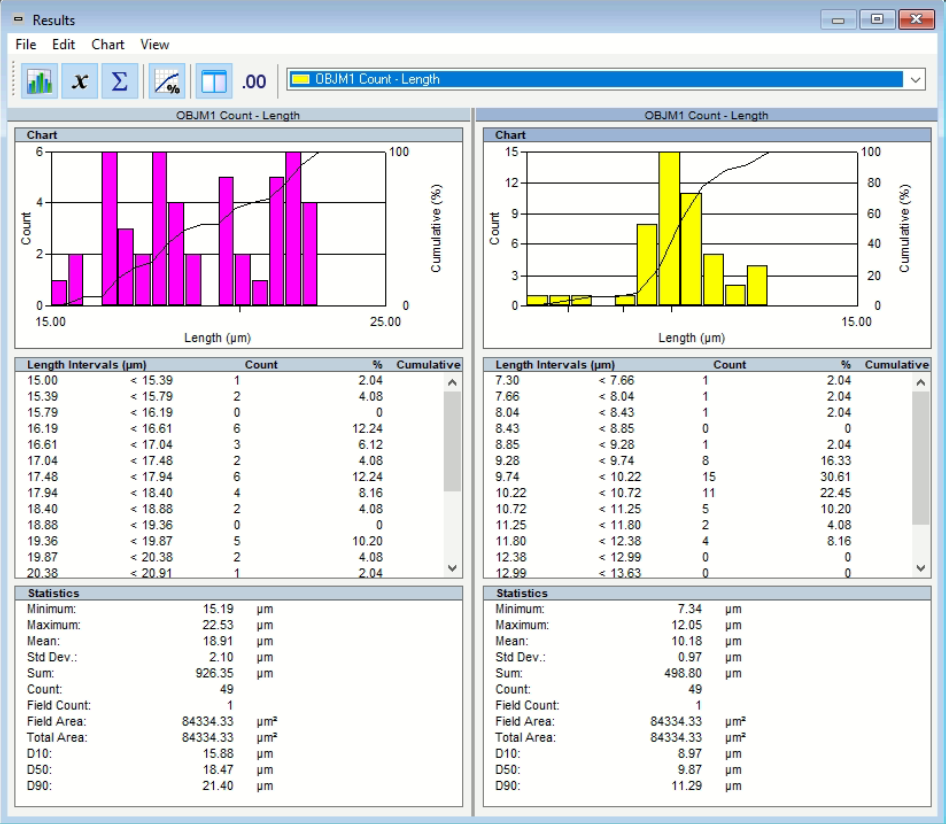
All features are correctly segmented using Clemex Studio. With the help of plugin, the results can be adequately obtained from Clemex Vision. The final measurement using GeneralLayerThickness.routine is shown below. The area percent of Matrix, Eutectic, Intermetallic and Pore are determined. This routine template is capable of characterizing up to five phases in the sample.